

3D Printed Bevel Gears (MVMT 25) : 11 Steps (with Pictures) - johnsonroon1987
Introduction: 3D Printed Bevel Gears (MVMT 25)
Cant gears change the angle of whatsoever rotation. They're essentially spur gears that user interface at a specified angle (usually 90º) so that the power source doesn't bear to be in short letter with the output of the motion. They'ray used in everything from bridge player drills to automotive vehicle differentials.
This instructable will show you how to use a Fusion 360 templet to make your own 3d-printable bevel gears of some size and ratio you want.
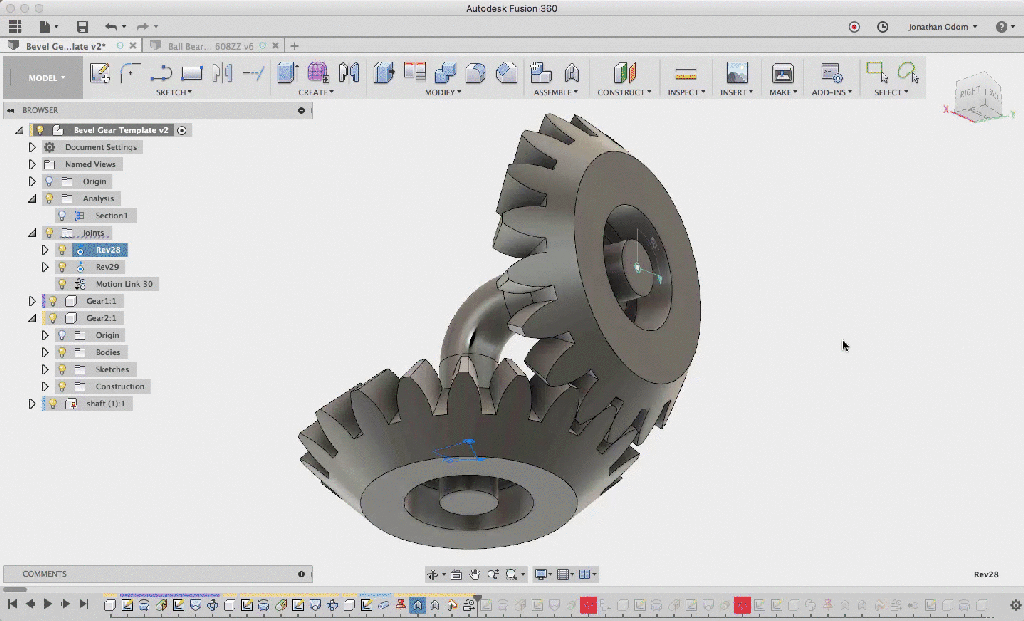
507 Mechanical Movements is an encyclopedia of rough-cut mechanisms from the 1860's that serves equally a good reference for this kind of thing. This mechanism is bases on Effort 25, "Bevel-Gears".This is going away to be along project, so if you've got a specific mechanism you'd like me to create, feel free to spend a penny a request in the comments!
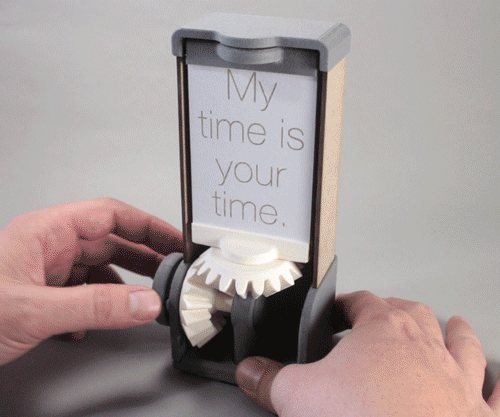
I used the gears to make this handy desktop sign. Information technology passive-sharply tells my coworkers whether I'm disposed to talk.
Step 1: Tools + Materials
- Fusion 360
- 3D Printer
-
I use a Prusa I3Mk3S for about everything. It's the best bang for your buck, in my opinion- very well successful, 3D printable replacement parts, surgical and trustworthy.
-
- 3D Print Filament
- I secondhand Matte Fiber HTPLA from Proto-pasta for this project, but beautiful much any fibril will work. I like this stuff because the finish looks really sainted.
- I used Polymaker Polyflex for the rubber feet. This stuff is good for this application because it creates more than clash on a desk top to hold the signal from sliding around.
- 608ZZ Skateboard Bearings: In that location are mountain of types to choose from, but any gaudy ones will do. Father't occupy too often about "spin prison term" as you would with fidget spinster.
- M3 Screws + Balmy: You could use some screws and cracked around this size, but I find these work well for small 3D printed physics projects.
- 100 Point Hardboard: This is secondhand for the cardinal panels and the sign of the zodiac panel. You can cut it with a straight edge and a hobby knife.
Fusion 360 is free and it's awesome. I use IT for everything I innovation and invent.
Student / Educator License (renew free every 3 years)
Hobbyist / Startup (renew free yearly)
Step 2: Parameters
Notation: Before you go any further, keep in nou that there's a Bevel Cogwheel Add-In for Windows. Follow this link to download it and you won't motivation to model your own gears! https://apps.autodesk.com/Optical fusion/en/Detail/Index?I.D.=2791960362914790676&appLang=en&operating system=Win64
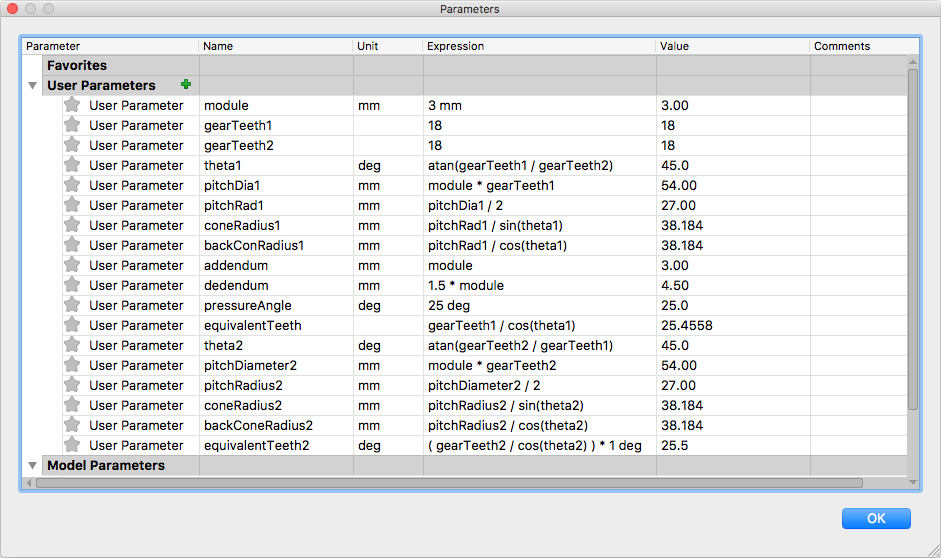
If you'Ra happening a Mac, follow the instructions here to model your own bevel square gears. Low gear, you'll penury to have all of the parameters shown above entered in the User Parameters list. If you upload the Bevel Gear Template.f3d archive file attached here into a Fusion Project, totally the parameters will be there for your use.
I'm not expiration to get into the math hither, merely suffice it to say that using entirely of these parameters wish allow you to construct properly meshing bevel gears without practically effort.
The parameters to pay attention to are gearTeeth1 and gearTeeth2. These set the number of teeth for each gear and allow you to create the ratio you need. For this project I ready-made them some the unvaried (18), but you could make them 18 and 24 for a 3:4 gear ratio, for instance.
For small hobby projects, you probably won't require to hatful with the other parameters to get a working result, only if you're savvy with gear design you can adjust the other parameters in Modify>Change Parameters.
Gradation 3: Make Gear 1
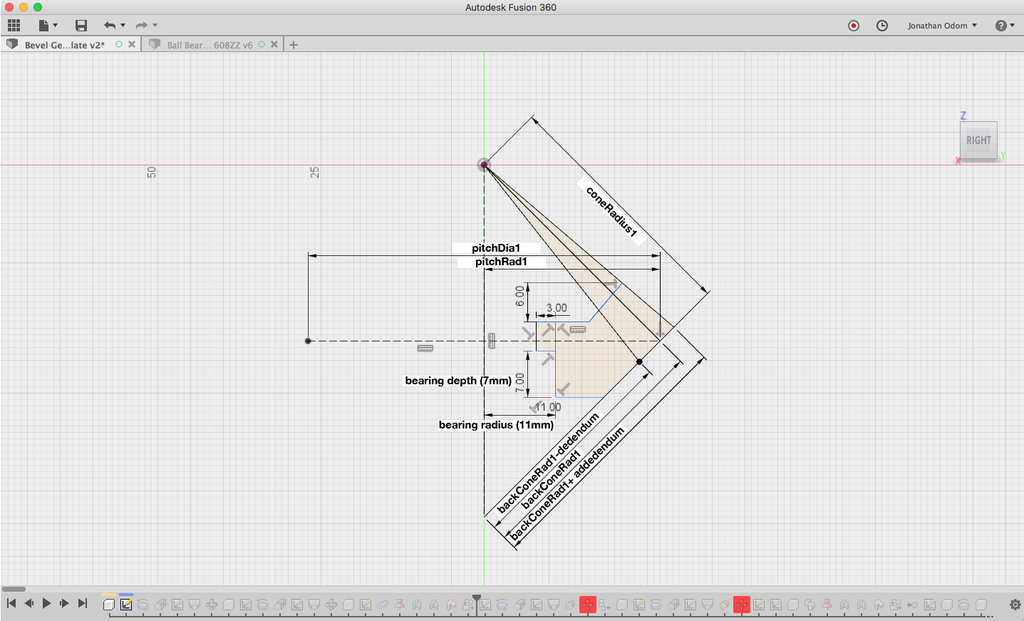
Maiden, create a study in the Right plane. This will be the profile of the gear or crisscross-section. Using the parameters listed above, make the lines you look there with the parameters on the annotated screenshot above.
Sink in happening the pictures at the top of this step to zoom in if you're having a hard time indication the inline picture supra.
You'll use the Cartoon > Sketch Dimension tool to enter the parameters. When you twice click on a attribute, you can start typing the call of the parameter and it will muster in a list.
Scrub the video recording demo to 0:00 if you need a little help drawing these lines.
This particular gear is premeditated to crush-fit a 608ZZ ball bearing, which is what the dimensions of the ledge on the middle of the profile are for.
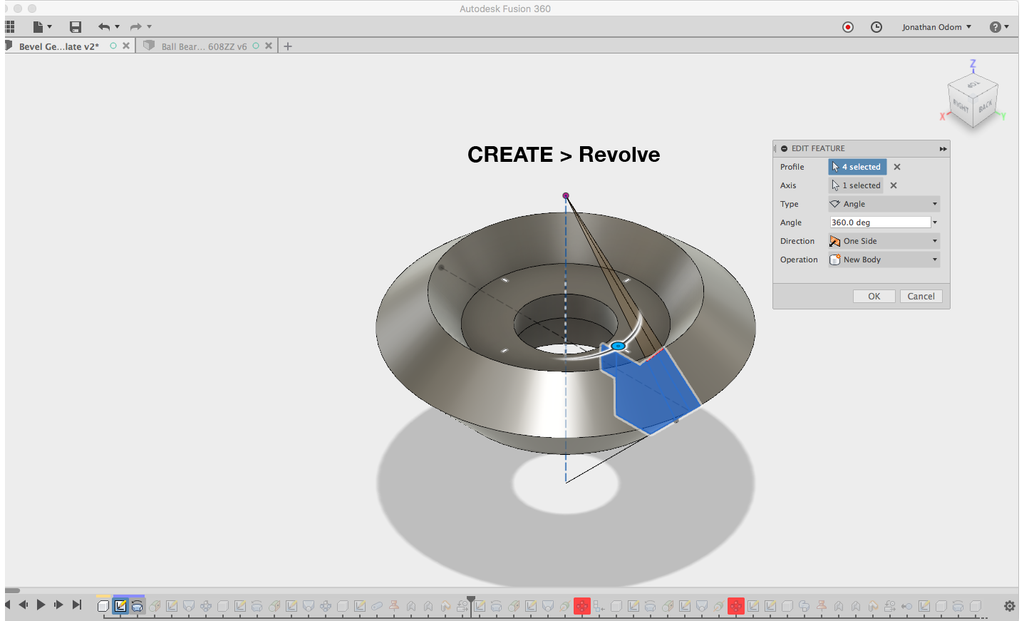
When the profile is finished, go to Produce > Rotate to revolve the closed profiles that make finished the cross-sectional. The Profile is the closed shape as shown above, and the axis is the first vertical personal credit line drawn in the cartoon.
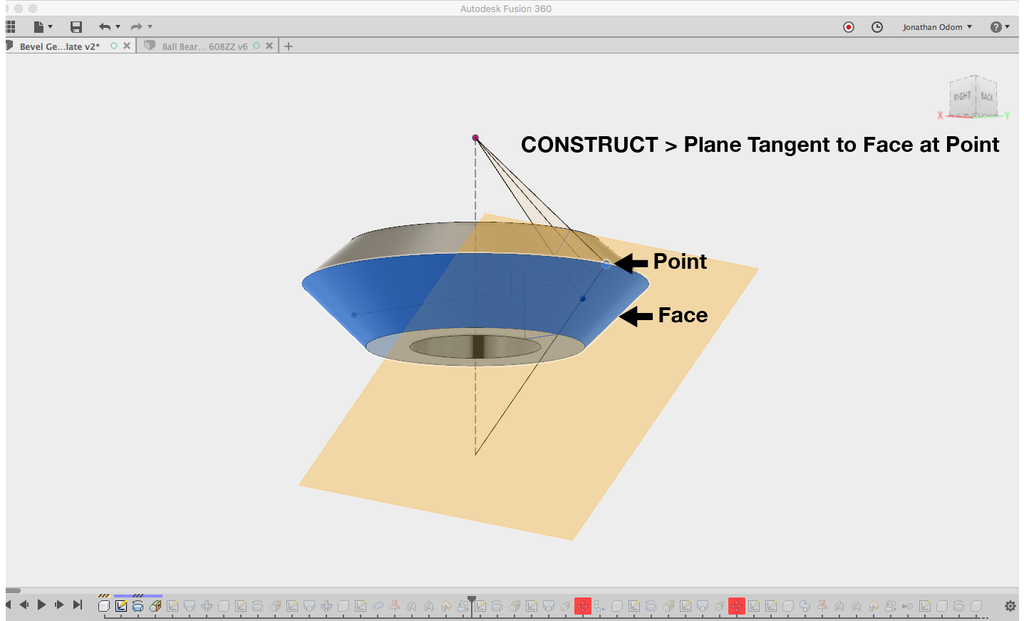
Next, you'll need to draw the tooth visibility. To manage this, show the 1st sketch in the Web browser, then CONSTRUCT > Plane Tangent to Side. The Face is the underside of the gear shape, and the point is any channelis happening the sketch that intersects with the Nerve.
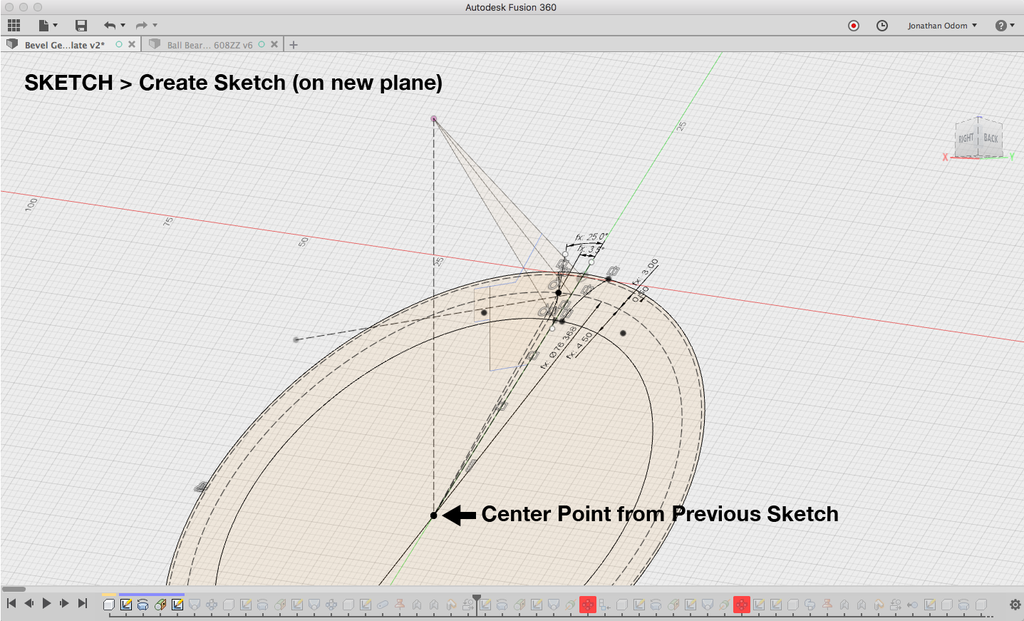
SKETCH > Make up Sketch and select the plane you just made as the Resume Airplane. SKETCH > Propose / Let in > Project the lowest point along the vertical line from the previous sketch. This will serve as the center point of some concentric circles.
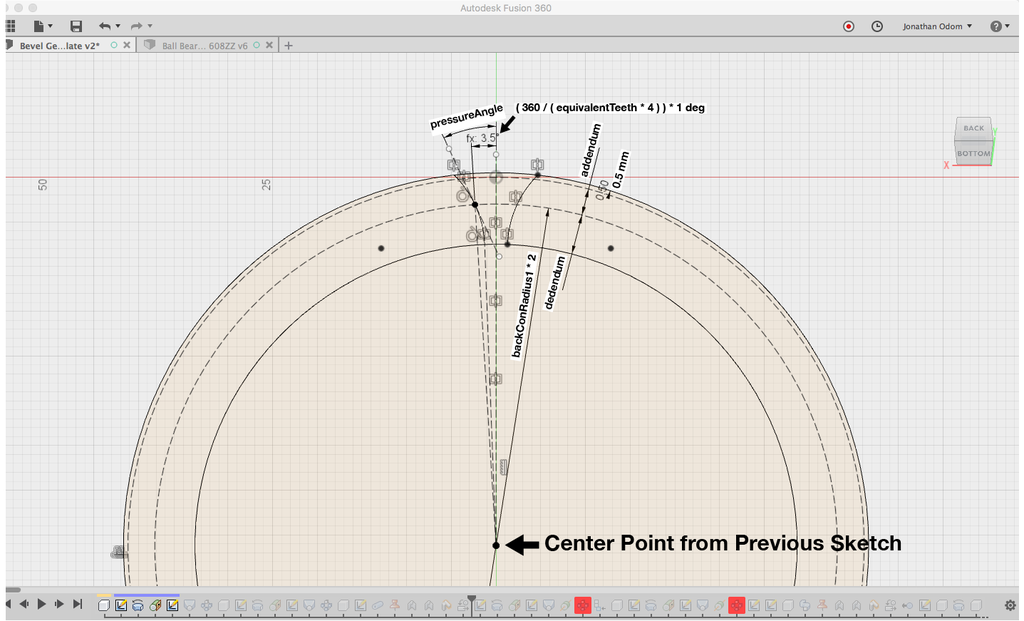
This sketch will be the profile of the tooth. Using the parameters listed above, draw the lines you check there with the parameters on the annotated screenshot/.
Click on the pictures at the top of this step to zoom in if you're having a hard prison term recital the inline envision in a higher place.
You'll use the SKETCH > Sketch Dimension tool to enter the parameters. When you double click along a dimension, you can start typing the name of the parameter and it bequeath total up in a tilt.
Scrub up the TV demo to 3:53 if you need a trifle assist drawing these lines.
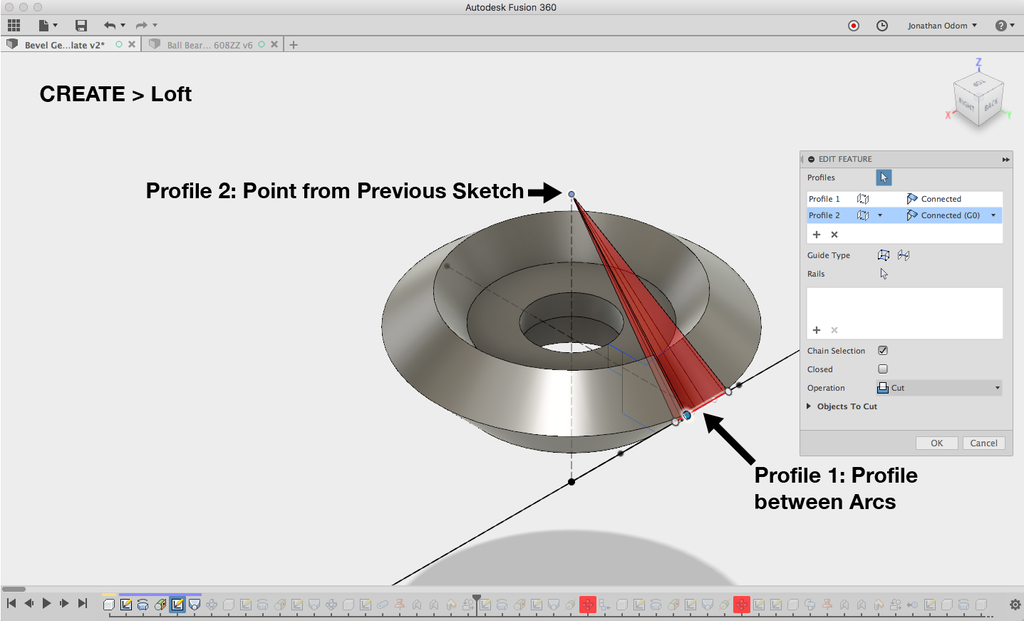
Now that you've got the tooth profile, you'll use CREATE > Loft to cut the shape out of the torso of the gear. Visibility 1 should be the closed profile from the most recent sketch, and Profile 2 testament atomic number 4 the point at the top of the upended line from the first sketch. This will cut out a tapered shape.

Directly that you've got your tooth feature cut out, CREATE > Pattern > Ball-shaped Pattern to make all the teeth. Objects will be the 3 faces that make up the cutout, and Axis will be the cylindrical present in the center. Quantity is the parametric quantity gearTeeth1.
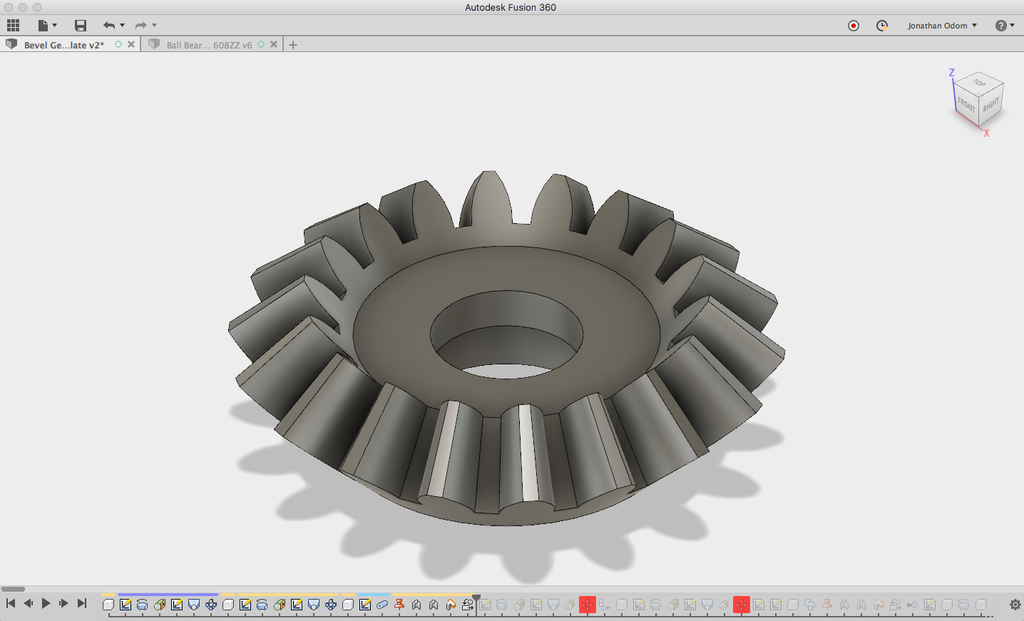
You should now take your first gear painted.
Step 4: Make Gear 2
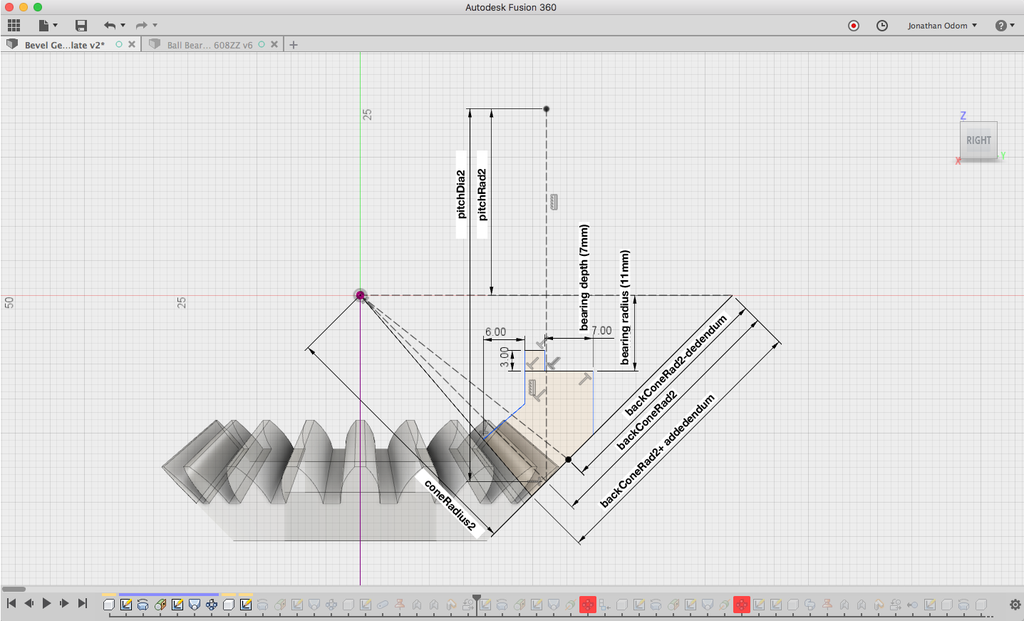
Next, you'll need to draw the cross-section of the second pitch.
First, create a sketch in the The right way plane. Cartoon > Project / Include > Project the point at the apical of the vertical line from the cross division of the first gear. This will be your terminus a quo for the second, ensuring that it meshes decently.
Using the parameters recorded above, draw the lines you see there with the parameters on the annotated screenshot above.
Click on the pictures at the top of this dance step to rapid growth in if you're having a hard time reading the inline picture above. You'll expend the SKETCH > Chalk out Dimension tool to participate the parameters. When you double flick connected a dimension, you can bulge typing the discover of the parameter and it will get up in a list.
Call off the video demo to 7:24 if you need a little help drawing these lines.
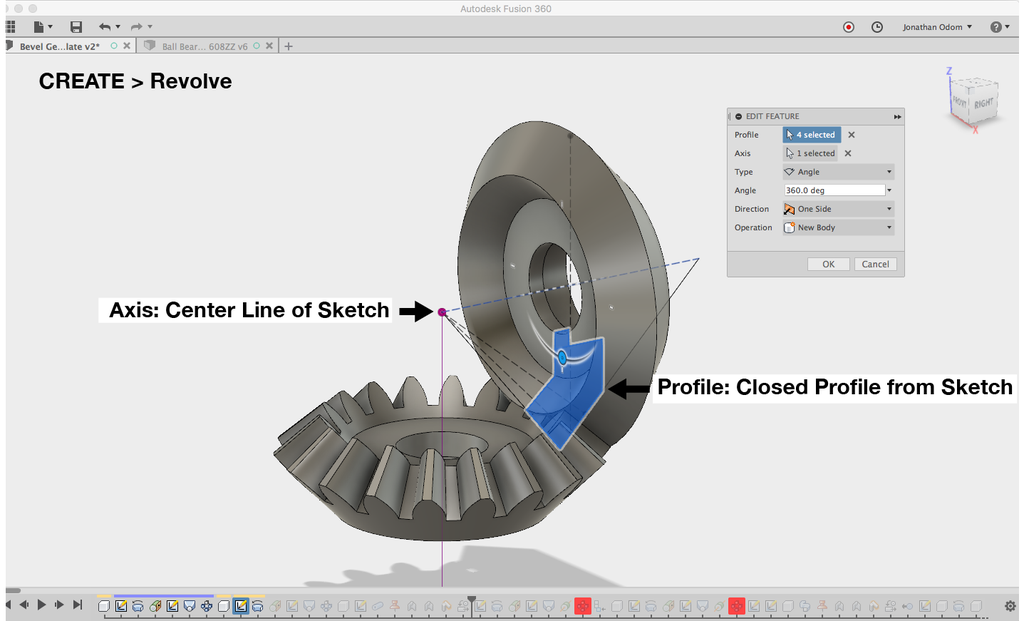
When the profile is finished, attend Produce > Revolve to revolve the closed profiles that make the foil-section. The Profile is the closed shape as shown to a higher place, and the axis is the first horizontal assembly line drawn in the sketch.
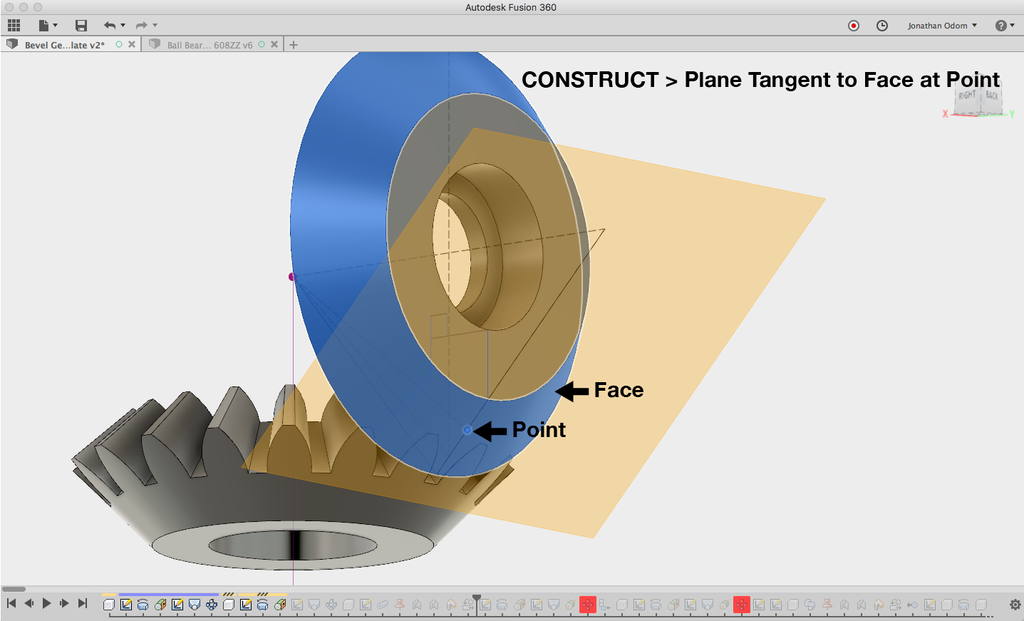
Succeeding, you'll need to draw the tooth profile. To do this, show the first sketch in the Browser, then CONSTRUCT > Plane Tangent to Face. The Face is the underside of the geartrain shape, and the point is any steer happening the sketch that intersects with the Chee.
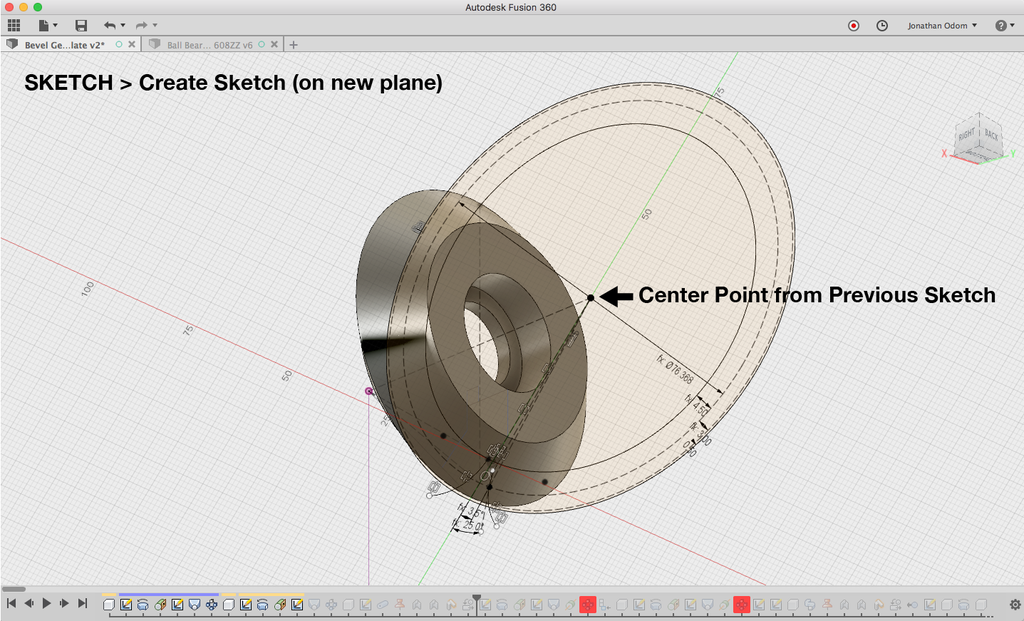
SKETCH > Create Survey and select the plane you sporty made as the Cartoon Plane. SKETCH > Project / Include > Project the point farthest to the right the horizontal line from the previous sketch. This will serve as the center point of some concentric circles.
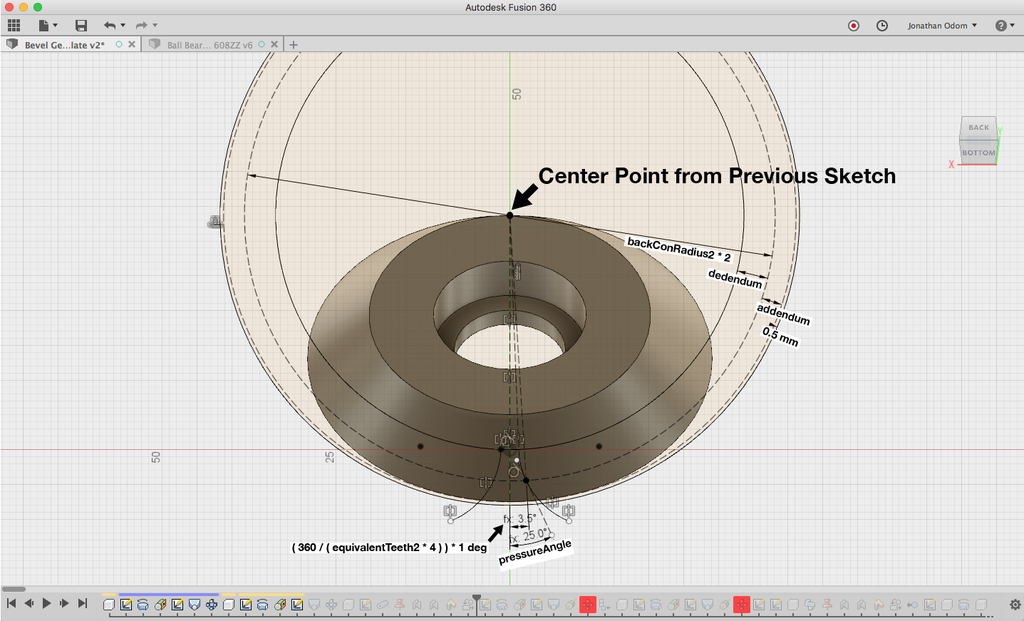
This sketch will be the profile of the tooth. Using the parameters listed above, suck the lines you see there with the parameters on the annotated screenshot.
Detent connected the pictures at the pass of this step to zoom in if you're having a rough sledding reading the inline picture higher up.
You'll use the SKETCH > Sketch Property tool to enter the parameters. When you double click on a dimension, you send away start typing the name of the parameter and it bequeath number up in a list.
Scrub the TV demo to 10:35 if you deman a little help drawing these lines.
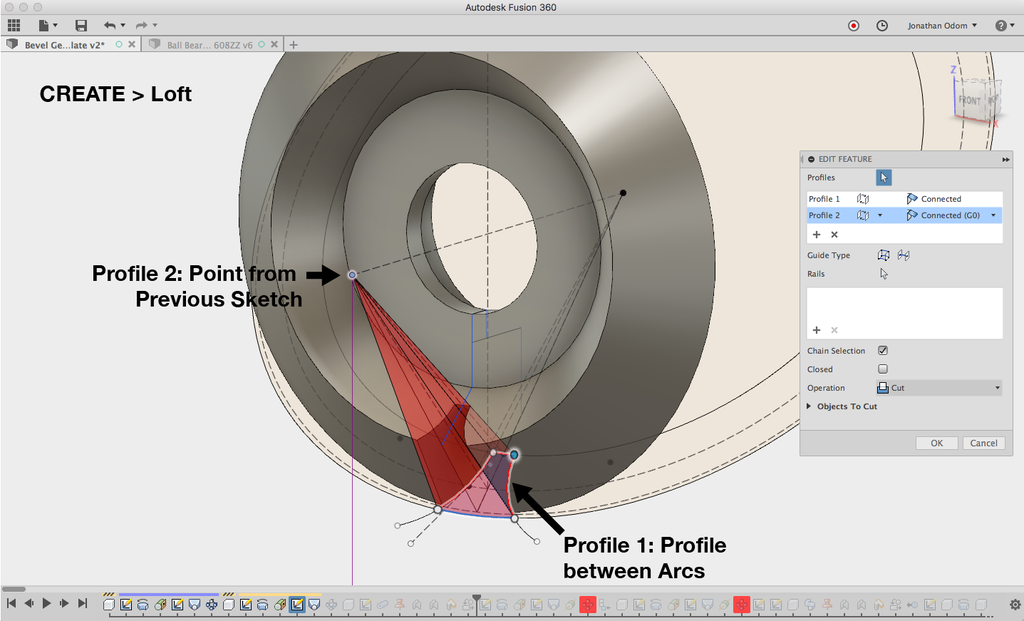
Now that you've got the tooth visibility, you'll use CREATE > Loft to slash the shape out of the organic structure of the appurtenance. Profile 1 should live the shut profile from the most recent survey, and Profile 2 will be the point connected the far right of the flat line from the initiatory chalk out. This will cut off a tapered shape.
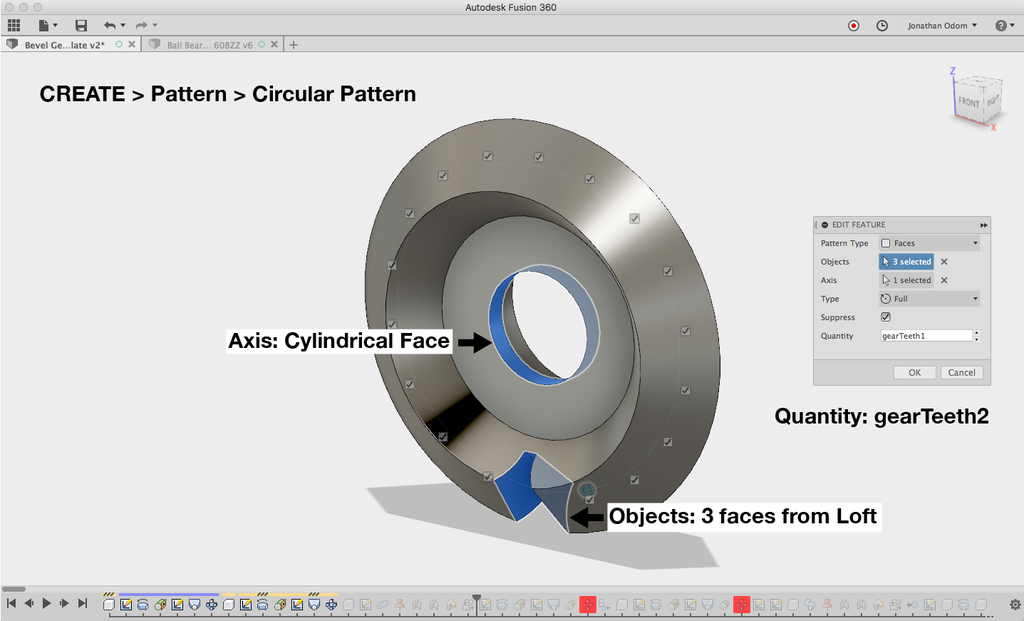
Directly that you've got your tooth feature film cut out, CREATE > Form > Discoidal Normal to make all the dentition. Objects will be the 3 faces that make up the cutout, and Axis leave be the cylindrical face up in the center. Quantity is the parameter gearTeeth2.
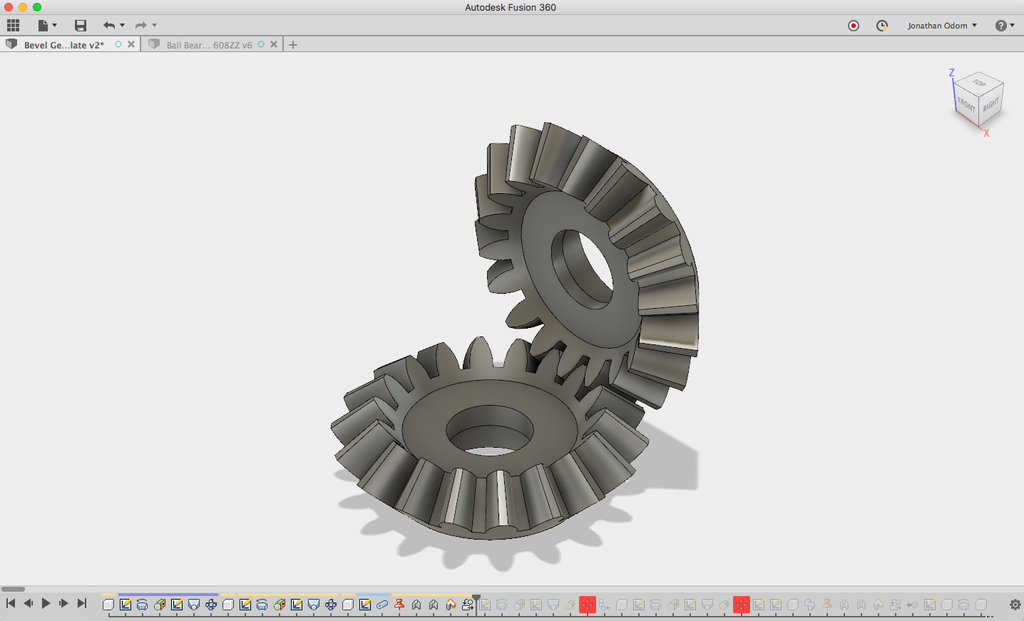
Gradation 5: Create Joints
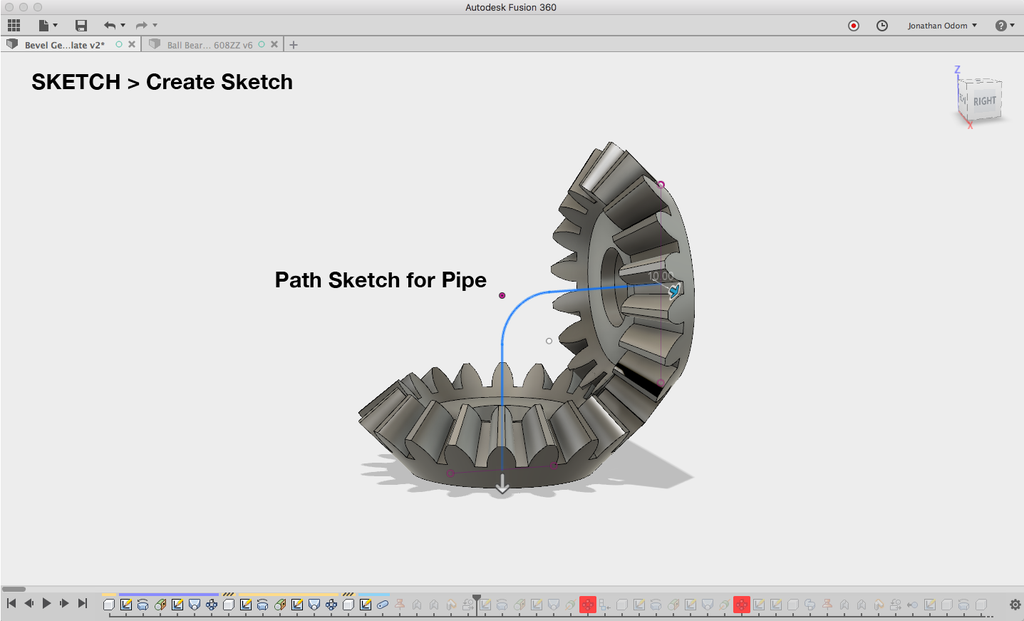
To make the gears move, you'll ask a nonmoving component to join them to. For this example I just successful a pipe from center point to center point of each geared wheel.
SKETCH > Create Vignette on the plane you drew the first sketch on (Satisfactory), project the gears to give yourself some lines to process from, and so draw the shape of a pipe from the mid points of the lines from the gears.
Bush the video demo to 14:30 if you involve a little help drawing these lines.
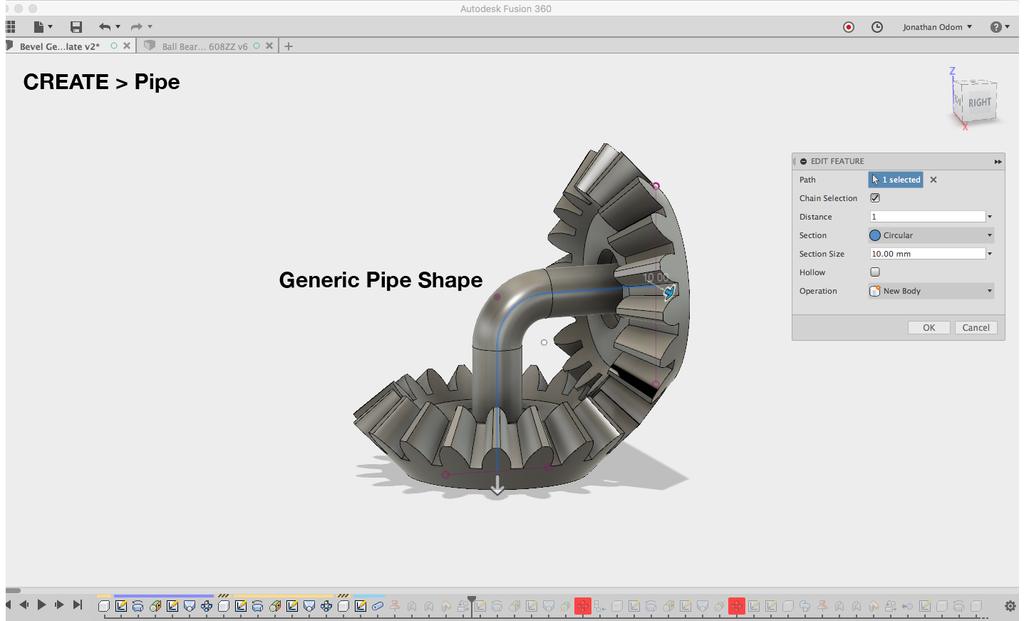
CREATE > Pipe, past select the track line from the previous vignette. The Section Size is capricious for the purposes of demonstrating the movement, but this pipe could exist edited to press-well the ball bearings.
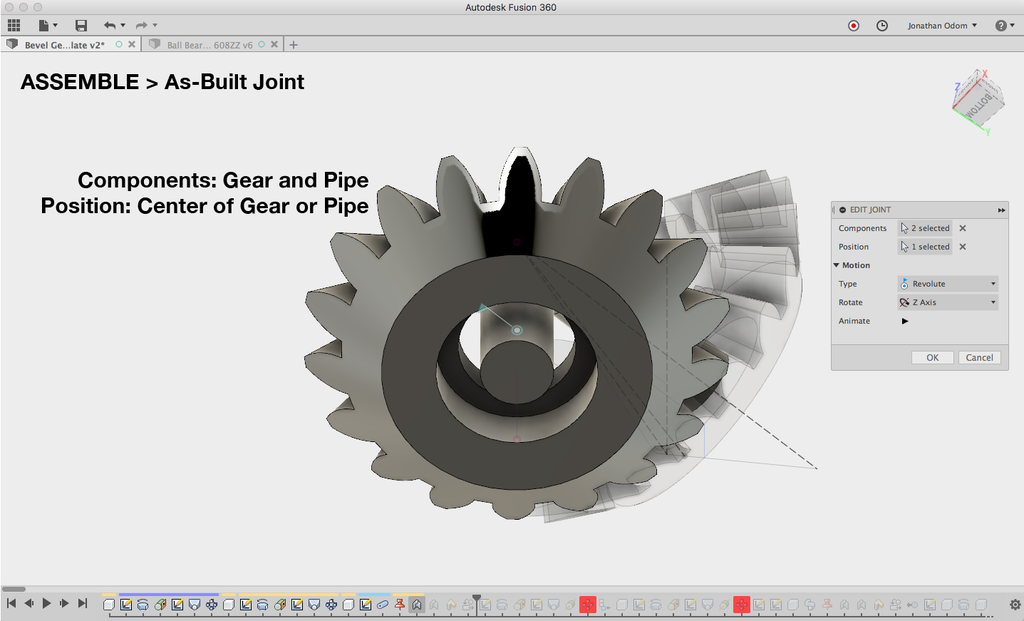
With the pipe component finished, right-click on it in the Web browser and choose Ground from the list. Go to ASSEMBLE > As-Collective Joint and mouse click 1 gear and the pipe. For Office, click one of the circular edges of the gear.
Recapitulate this step with the other gear.
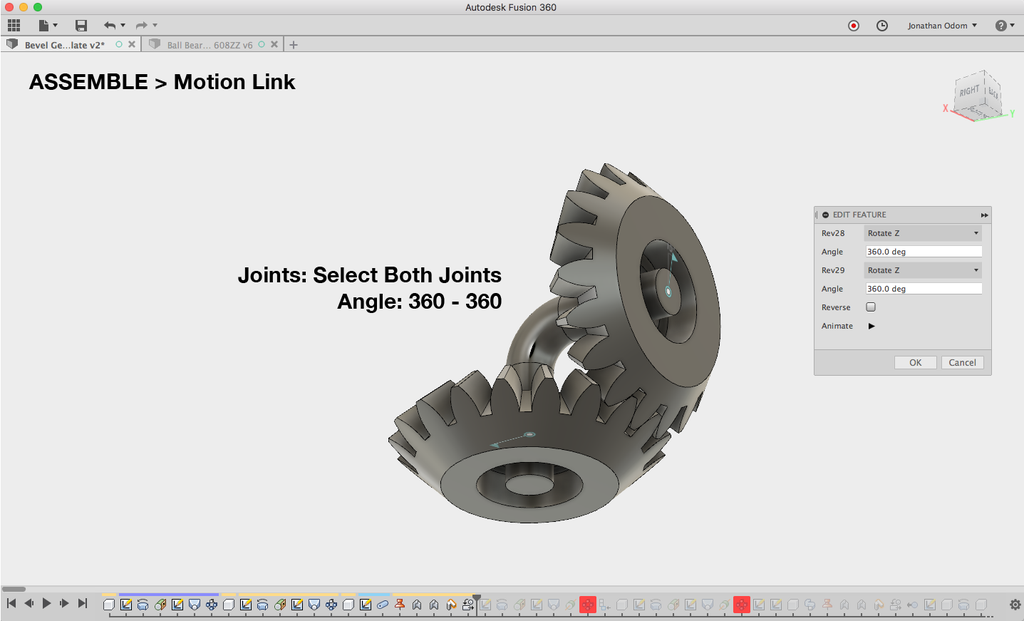
To see how IT will get in real life, you can use a Motility Link. First, rotate one of the gears so that it meshes properly with the other ane. Click along one of the joints, then set the angle to 360 / (number-of-teeth/2). Since there are an tight number of dentition and gaps (assuming the gear teeth parameter is an even number), that's the correct math.
ASSEMBLE > Motion Link, then click some of the joints. The default setting is 360º and 360º, which works in that case.
Good-click on a joint, then select Animate Modeling from the list and watch IT spin!
Step 6: Practical application: Desk Sign
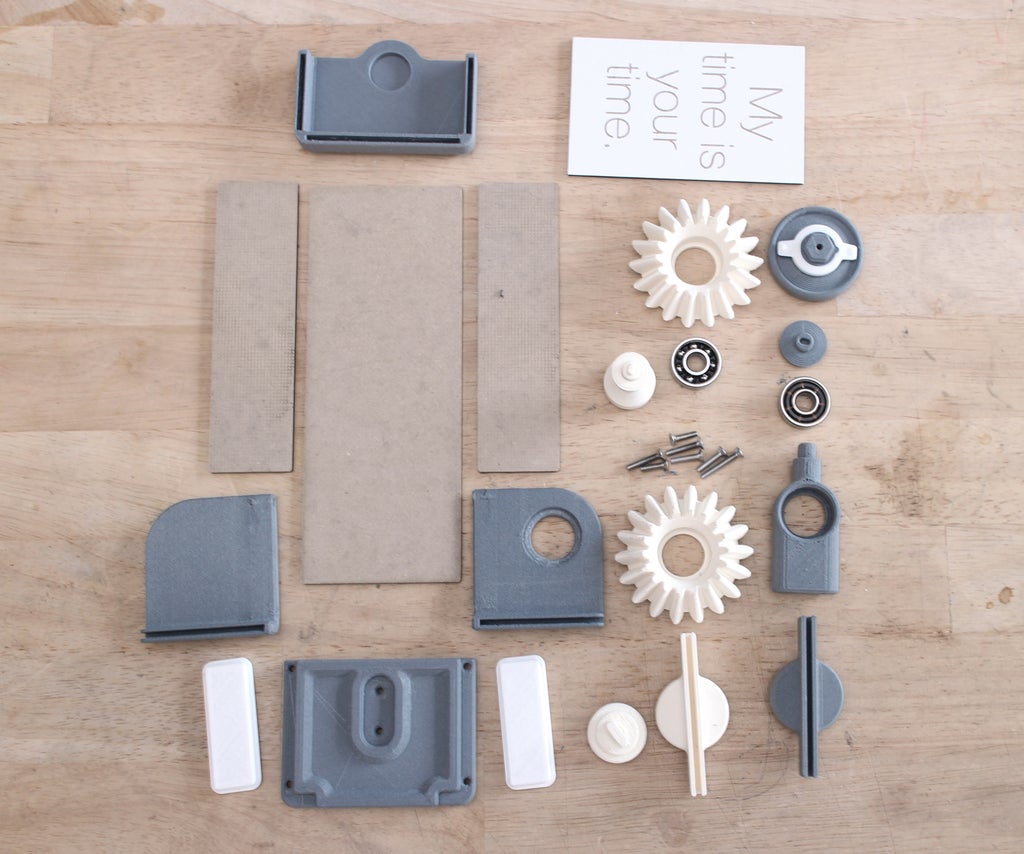
The STL files attached here are ready to impress, the card line nates equal baseball swing victimization the PDF template sessile. Be sure to print it at 100% scale / no scaling / creative size up.
My chip board was 2.6mm viscous, so you power want to alter the design in Fusion to make the corporate equal whatever card stock Beaver State knap board you might wealthy person available.
Hither's a connexion to the lodge, feel sovereign to download and remix it As you like: http://a360.co/2zU46UC
Step 7: Vinyl Sticker
I victimized a custom vinyl prickle for my sign, but you could always just photographic print something out on paper and rubber cement it to the jury if you don't have access to peerless. I just utilised IT because I alike the look of the letters being negatives showing the come off board behind it.
If you've got access to a vinyl group cutter you can use the PDF attached in the previous footmark or you seat just print IT on composition.
- Call for the cut vinyl toughie and take the excess poser material around the ones you want to apply.
- Take some vinyl radical transfer tape and smooth it down on top of the stickers.
- Flip it terminated and peel off the backing- do it slowly and carefully so that none of the letters desquamate.
- Aline the venire with the edge of the sticker and press it down.
- Use a credit card or plastic putty knife to abolish any bubbles and ensure a solid fit.
- Use a hobby knife or sculpting tool to remove the positives of the letters.
- Flip the board over and repeat.
Stair 8: Assembl the Chalk Axle
The best right smart to put it together is to assemble the crank axle outset. There's a small-scale "spring" that fits inside the boss that Acts as a clip- there are divots in the square bracket that catch points protruding from the spring. This lets the sign stay at the comely angle at 180º increments.
- Press-fit the spring as shown.
- Enter the knob in the bracket with the pickle in it as shown, then press-jibe the "knobShaft" into IT through the jam.
- Use an M3 X 20 screw to lock them together.
- Constrict-able-bodied "gearSide" into the "knobShaft". This may need to Be adjusted so that the rotation puts the check in the right situatio later. You can do this past material possession the knob and turning the gear slimly.
- Press a 608ZZ bearing into the "post"
- Enclose the "shaft" into the opening on "gearSide".
- Press the bearing on the "post" into the stop of the "shaft" so that the shoulder is along the gear side.
- Press the "endCap" into the else end of the bearing.
Step 9: Stop the Base
- Fit the "bracket" and "post" to the infrastructure as shown, and then usage some M3 X 16 screws to lock them down.
- Screw the other bracket into place.
- Add the second bearing to the recess in "gearUp" and pressur-fit the bearing onto the post as shown.
- Press in the "clipDn" into the gear indeed that the notch lines up with the pit in the gear.
- Time lag the knob and turn the "gearSide" so that the "clipDn" is parallel to the front of the base.
Abuse 10: MBD the Panels and Feet
- Add the panels to the base as shown. They should one-armed bandit in snugly if the thickness is the Saami As the hardboard I used. If they're non snug, you could just glue them in place.
- Press the sign into to the "clipDn".
- Add together the "clipUp" part to the top of the sign of the zodiac.
- Press-fit the "round top" part thusly that it fits all of the vertical pieces and captures the round feature on top of "clipUp".
- Use some E-6000 or past adhesive to add the feet as shown.
Gradation 11: Ruined Product
I'm pretty happy with how this turned out. The gears have really smooth action and the nip works symptomless to restrain the communicative aligned.
IT power be play to do something like Thang's youtube video: https://www.youtube.com/watch?v=uCx9riKxTvY
What will you exercise bevel gears for? Read U.S.A what you make!
2 People Ready-made This Project!
Recommendations
Source: https://www.instructables.com/Bevel-Gears/
Posted by: johnsonroon1987.blogspot.com
0 Response to "3D Printed Bevel Gears (MVMT 25) : 11 Steps (with Pictures) - johnsonroon1987"
Post a Comment